


Metal vs Self-Ligating Brackets: Key Differences for Clinical Practice
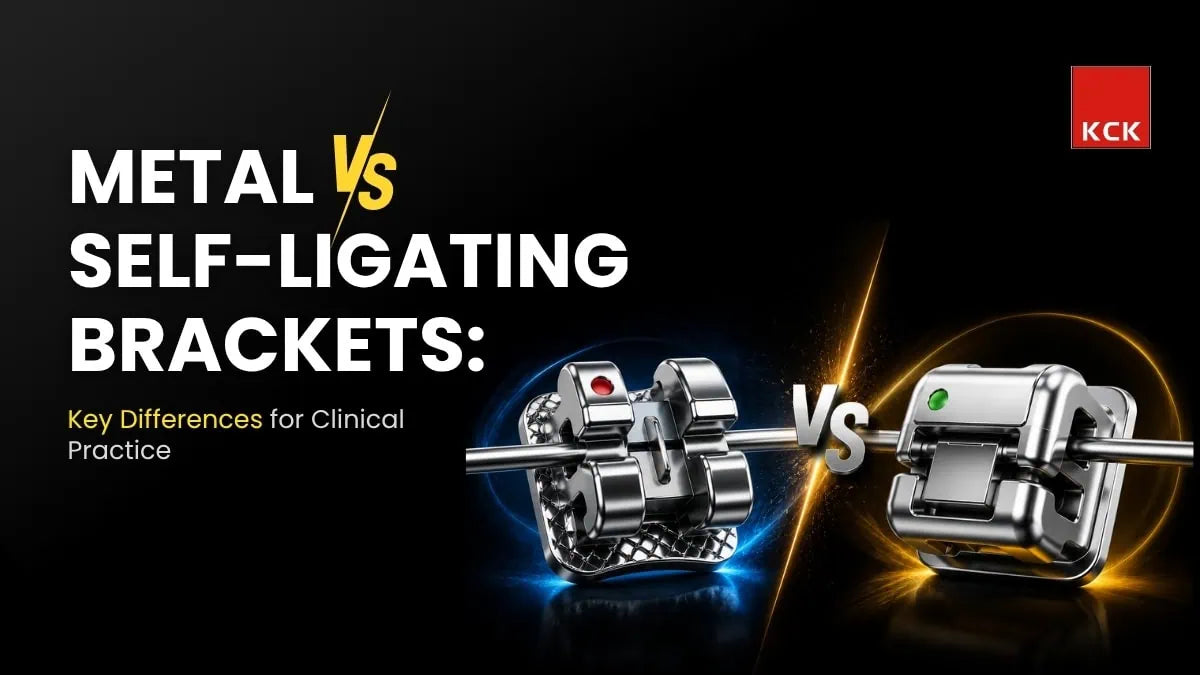
The orthodontic market in India is growing quickly as more teenagers and adults seek effective and aesthetic treatment options.
Clinics today have several bracket systems to choose from, with conventional metal brackets and self-ligating brackets being among the most widely used.
Selecting the right bracket system can affect treatment efficiency, patient comfort, clinical workflow, and overall costs.
This article compares self-ligating brackets and conventional metal brackets to help orthodontic clinics decide which system best suits their patients, practice goals, and budget.
What Are Traditional Metal Brackets?
Traditional metal brackets are stainless-steel brackets bonded to the front surface of the teeth. They work with an archwire and elastic ligatures to gradually move teeth into their correct position. They are the most widely used and cost-effective orthodontic bracket system.
Key Features of Traditional Metal Brackets
- Made from durable stainless steel
- Fixed to the front of the teeth
- Use elastic ligatures to hold the archwire in place
- Effective for treating simple and complex cases
- Reliable and predictable treatment outcomes
- Cost-effective compared to advanced bracket systems
- Elastic ligatures are available in different colours
- Require regular adjustment appointments
- Suitable for patients of all age groups
What Are Self-Ligating Brackets?
Self-ligating brackets are an advanced type of orthodontic bracket that uses a built-in sliding mechanism or clip to hold the archwire, eliminating the need for elastic ties. This design reduces friction between the wire and bracket, allowing teeth to move more efficiently with lighter forces.
Self-ligating brackets come in two main types: passive (where the archwire sits loosely in a tube-like slot) and active (where a spring clip applies light pressure on the wire). Both types aim to reduce friction and improve treatment dynamics compared to conventional systems.
Key Features of Self-Ligating Brackets
- No elastic ties required
- Lower friction between the wire and bracket
- Lighter forces for tooth movement
- Improved patient comfort during treatment
- Easier to maintain oral hygiene
- Fewer adjustment appointments in many cases
- Potentially shorter treatment time in suitable cases
- May reduce the need for extractions in selected patients
- Supports broader arch development and facial aesthetics
Self-Ligating vs Metal Brackets: Quick Comparison
|
Feature |
Self-Ligating Brackets |
Traditional Metal Brackets |
|---|---|---|
|
Bracket Type |
Self-ligating brackets |
Conventional brackets |
|
Wire Holding Method |
Built-in sliding door mechanism |
Elastic or metal ligatures |
|
Friction Level |
Lower friction |
Higher friction |
|
Chairside Time |
Usually shorter adjustment visits |
Usually longer adjustment visits |
|
Oral Hygiene |
Easier to clean, no elastic ties |
More plaque retention around elastics |
|
Patient Comfort |
Lighter forces and greater comfort |
May cause more pressure after adjustments |
|
Cost |
Higher treatment cost |
More affordable option |
|
Maintenance |
Fewer adjustments required |
Regular adjustments required |
|
Learning Curve |
Requires familiarity with self-ligating protocols |
Familiar system for most orthodontists |
|
Suitable Cases |
Mild to complex orthodontic cases |
Mild to complex orthodontic cases |
|
Clinic Investment |
Higher initial inventory and training costs |
Lower setup and inventory costs |
Why Do Clinics Choose Traditional Metal Brackets?
Many clinics continue to choose metal brackets because they are reliable, durable, and effective for a wide range of orthodontic cases. They give orthodontists excellent control over tooth movement and deliver predictable results.
Benefits of Traditional Metal Brackets
-
Excellent Control: Metal brackets help orthodontists manage complex tooth movements and difficult bite corrections with precision.
-
Consistent Treatment: Since the brackets are fixed to the teeth, they work all day and night without depending on patient cooperation.
-
Strong and Durable: Made from stainless steel, metal brackets can handle daily wear and are less likely to break or chip.
-
Cost-Effective: They are generally more affordable than many advanced orthodontic systems.
-
Suitable for Complex Cases: They can effectively treat mild, moderate, and severe orthodontic problems.
-
Customizable Appearance: Patients can choose different coloured elastic bands to personalize their braces at each visit.
-
Proven Results: Metal brackets have been used successfully for decades and remain a trusted treatment option.
Also Read: Metal vs Ceramic Brackets
Why Do Clinics Choose Self-Ligating Brackets?
Many clinics choose self-ligating brackets because they use a built-in clip or door that eliminates the need for elastic ties. This reduces friction, allows smoother tooth movement, and can make treatment more efficient.
Benefits of Self-Ligating Brackets
-
Faster Treatment: Low-friction brackets and advanced archwires help teeth move more efficiently.
-
Fewer Clinic Visits: Patients usually need fewer adjustment appointments compared to conventional brackets.
-
Improved Comfort: Lighter forces reduce pressure and discomfort during treatment.
-
Better Oral Hygiene: Without elastic ties, there are fewer areas for food and plaque to collect, making brushing and flossing easier.
-
May Reduce Extractions: The system can support natural arch development, which may help manage crowding without extracting teeth in some cases.
Which Bracket System Is Better for a New Dental Clinic?
There is no single bracket system that is best for every clinic. The right choice depends on your budget, patient preferences, treatment goals, and practice model.
Traditional Metal Brackets
Metal brackets are often a good starting point for new clinics because they:
- Require a lower initial investment
- Use a familiar and well-established workflow
- Are easy for most orthodontists to manage
- Offer reliable results for a wide range of cases
- Help keep treatment costs affordable for patients
Self-Ligating Brackets
Self-ligating brackets may be a good option for clinics looking to offer a premium orthodontic service because they:
- Support a modern, self-ligating clinical workflow
- Appeal to patients seeking advanced treatment options
- Can enhance a clinic's premium positioning
- Offer improved comfort and fewer adjustment visits for many patients
-
Help differentiate the practice in competitive markets
Ultimately, both systems can deliver excellent clinical results. New clinics should choose the bracket system that best matches their patient base, budget, and long-term business goals.
Treatment Efficiency: Self-Ligating vs Metal Brackets
|
Factor |
Self-Ligating Brackets |
Traditional Metal Brackets |
|---|---|---|
|
Wire Changes |
Generally quicker due to the self-ligating design |
May take longer as elastic ligatures need replacement |
|
Friction Control |
Lower friction between wire and bracket |
Higher friction due to elastic ties |
|
Adjustment Frequency |
Usually, fewer adjustment visits |
Usually, more frequent adjustment visits |
|
Archwire Movement |
Allows smoother wire movement within the bracket |
Wire movement is more restricted by ligatures |
Important Note on Overall Treatment Time
The overall treatment time does not depend on the bracket system alone. It is also influenced by:
- Accurate diagnosis and treatment planning
- Proper biomechanics and clinical technique
- Patient cooperation and oral hygiene
-
Case complexity and treatment goals
Both self-ligating and traditional metal brackets can deliver successful outcomes when used appropriately by a skilled and well-trained clinician.
Cost Comparison for Clinics
|
Cost Factor |
Self-Ligating Brackets |
Traditional Metal Brackets |
|---|---|---|
|
Initial Inventory Cost |
Higher investment due to the self-ligating bracket system |
Lower investment and easier to stock |
|
Replacement Components |
Fewer consumables — elastic ties not required |
Ongoing cost for elastic ligatures and related materials |
|
Patient Pricing |
Usually offered at a higher treatment fee |
Generally more affordable for patients |
|
ROI Potential |
Higher revenue potential for premium orthodontic services |
Steady return through lower setup costs and wider patient accessibility |
Key Takeaway: The best option depends on the goals of your clinic and patient base. Metal brackets offer a lower-cost entry point, while Damon brackets can support premium treatment offerings and higher case fees.
10 Common Mistakes Clinics Make When Choosing Bracket Systems
Choosing the right bracket system is an important decision for any clinic. However, many practices make avoidable mistakes that can affect costs, workflow, and patient satisfaction.
1. Following Trends Instead of Clinical Needs
Some clinics choose a bracket system simply because it is popular or heavily marketed. Instead, focus on what works best for your patients and treatment goals.
2. Ignoring Patient Demographics
Patient preferences vary by location and age group. Some patients prioritize affordability, while others are willing to pay more for advanced treatment options.
3. Overinvesting Too Early
New clinics sometimes invest heavily in premium systems before understanding patient demand. Start with a system that matches your budget and growth plans.
4. Lack of Staff Training and Familiarity
A new bracket system may require additional training. Ensure that orthodontists and support staff are comfortable with the workflow before full implementation.
5. Not Considering Maintenance Workflow
Different bracket systems require different appointment schedules, inventory management, and chairside procedures. Choose a system that fits your clinic's daily operations.
6. Focusing Only on Cost
The cheapest option is not always the best, and the most expensive option is not always necessary. Consider clinical outcomes, patient experience, and long-term value when making your decision.
7. Limiting Treatment Options
Relying on only one bracket system may not meet the needs of every patient. Offering multiple treatment options can help serve a wider patient base and increase overall case acceptance.
8. Not Evaluating Product Quality and Supplier Reliability
Clinics sometimes choose bracket systems based on price alone, without assessing product quality or supplier reliability. Inconsistent bracket quality can lead to bond failures, rebonding appointments, and patient dissatisfaction. Always verify that products meet relevant quality standards and purchase from trusted ISO dental suppliers who can provide genuine products, proper documentation, and consistent stock availability.
9. Skipping a Trial Period Before Full Adoption
Many clinics commit to a bracket system across all cases without first running a trial on a small number of suitable patients. A trial period allows you and your team to assess chairside workflow, patient feedback, and clinical outcomes before making a full inventory investment. Transitioning too quickly can disrupt your existing workflow and create unnecessary pressure on your team.
10. Neglecting Patient Education and Communication
Clinics often focus entirely on the clinical side of bracket selection without thinking about how well they explain the chosen system to patients. Patients who do not understand why a particular bracket system was recommended for them are more likely to question costs, miss appointments, or lose confidence in the treatment. Clear communication about the advantages and expected experience of the selected system improves compliance, reduces dropouts, and builds long-term trust in your practice.
Tips for Dental Students and Beginner Orthodontists
Choosing a bracket system is important, but strong orthodontic fundamentals matter even more. Focus on building your clinical skills before developing a preference for any specific system.
1. Learn Conventional Systems First
Start with traditional metal brackets. They help you understand the basics of orthodontic treatment, bracket mechanics, and archwire sequencing from the ground up.
2. Understand Biomechanics Before Choosing a System
No bracket system can replace sound biomechanical principles. Learn how forces move teeth and how different mechanics affect treatment outcomes before selecting any advanced system.
3. Practice Wire Handling Techniques
Develop confidence in wire bending, wire placement, and adjustment procedures. Good wire handling skills improve treatment efficiency regardless of the bracket system used.
4. Focus on Diagnosis and Treatment Planning
Accurate diagnosis and proper treatment planning are the foundation of successful orthodontics. Even the most advanced bracket system cannot compensate for poor planning.
5. Choose Systems Based on Clinical Comfort
Use the bracket system that matches your training, experience, and treatment approach. Clinical confidence often leads to better efficiency and improved patient care.
6. Keep Learning and Updating Your Skills
Orthodontic technology continues to evolve. Attend courses, workshops, and continuing education programs to stay updated with new techniques and systems.
Choose the Right Orthodontic System for Your Clinic
Both self-ligating brackets and traditional metal brackets can deliver excellent orthodontic results when used correctly. The right choice depends on your clinic's budget, treatment approach, patient preferences, and long-term goals.
Before selecting a bracket system, focus on clinical performance, workflow efficiency, patient experience, and overall value. It is also important to choose products that meet relevant ISO and clinical quality standards to ensure safety, reliability, and consistent treatment outcomes.
At KCK, clinics can explore a range of reliable orthodontic brackets and orthodontic solutions designed to support modern dental practice. Whether you are setting up a new clinic or expanding your orthodontic services, choosing the right system can help improve efficiency, patient satisfaction, and clinical success.
Frequently Asked Questions
1. What is the main difference between self-ligating brackets and metal brackets?
The main difference is how the archwire is held in place. Self-ligating brackets use a built-in sliding mechanism or clip, while traditional metal brackets use elastic or metal ligatures. This design gives self-ligating brackets lower friction and a different treatment workflow.
2. Are self-ligating braces better than metal brackets?
Not necessarily. Both systems can provide excellent treatment results. Self-ligating brackets may offer benefits such as lower friction and fewer adjustment visits, while metal brackets are cost-effective, reliable, and widely used. The best choice depends on the patient's needs and the orthodontist's treatment approach.
3. Which brackets are better for a new dental clinic?
There is no single best option. Traditional metal brackets are often a practical starting point because they require a lower investment and use a familiar workflow. Self-ligating brackets may suit clinics that want to offer premium orthodontic services and advanced treatment options.
4. Do self-ligating braces require fewer adjustments?
In many cases, yes. Self-ligating brackets often require fewer adjustment appointments because they do not use elastic ties and allow the archwire to move more freely. However, appointment schedules vary depending on the treatment plan and case complexity.
5. Are traditional metal brackets still widely used?
Yes. Traditional metal brackets remain one of the most commonly used orthodontic systems worldwide. Orthodontists continue to use them because they are durable, effective, affordable, and suitable for a wide range of cases.
6. What are the two types of self-ligating brackets?
Self-ligating brackets are broadly classified into passive and active types. Passive brackets allow the wire to slide freely through a tube-like slot with minimal friction, while active brackets use a spring clip to apply light pressure on the archwire for more active control during treatment.

Last Chance Deals


Last Chance Deals


Last Chance Deals


Rs. 2,600.00
Rs. 3,400.00
24% Off

Last Chance Deals


Last Chance Deals


