
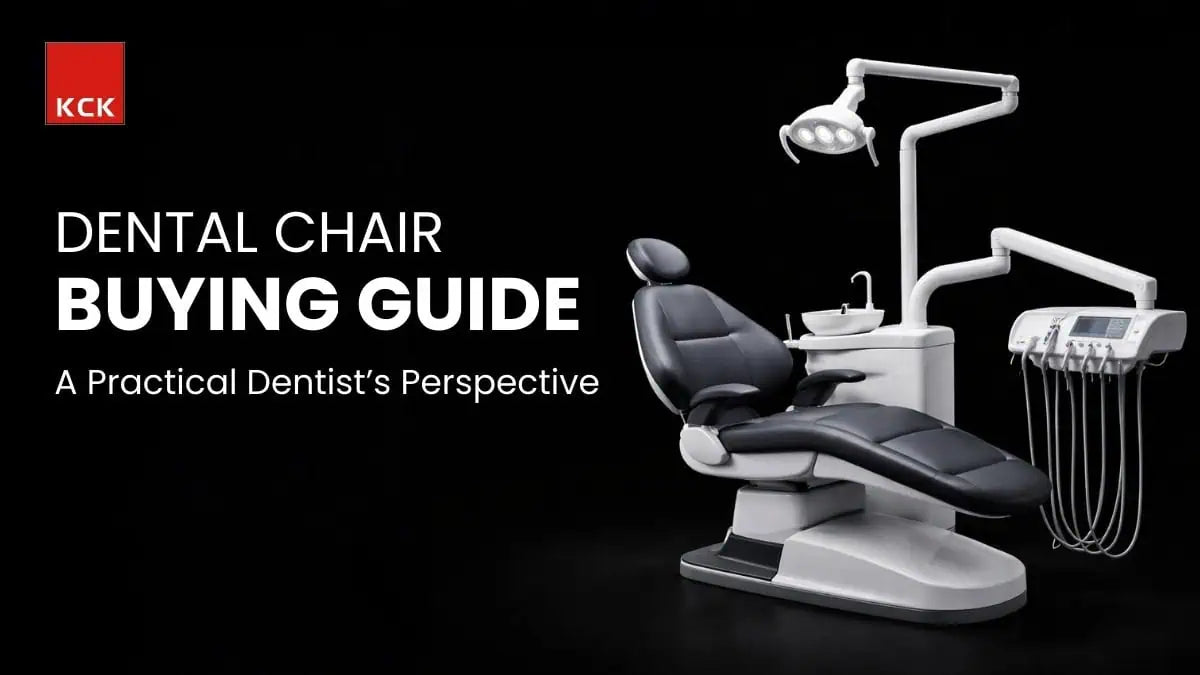
A dental chair is inevitable for any dental practice.
When dentists approach us as dental equipment suppliers, they often ask, “Which is the best dental chair?” especially when they are new to practice.
This question usually leads to confusion and, in many cases, the wrong dental chair selection.
The reason is simple: a dental chair must match how you work, the type of dentistry you provide, your patient flow, and your clinic space.
So, the better question is: “Which dental chair suits my practice?”
This Dental Chair Buying Guide is written from a practical dentist’s perspective. It helps you think clearly, ask the right questions, and evaluate dental chairs based on real clinical needs, not assumptions.
Types of Dental Chairs Available in India
Understanding chair types helps you narrow choices quickly. Each type supports a different practice style, space, and budget.
-
Basic Hydraulic Dental Chair

This chair uses manual or hydraulic control for movement. It has fewer electronics and a simple structure that suits clinics with low patient volume or basic procedures. Maintenance is usually easy, and costs are lower.
-
Fully Automatic / Electric Dental Chair

This chair uses electric motors for all movements. You can control positions using buttons or foot controls. It supports faster workflow and consistent positioning. It suits busy clinics and long clinical procedures.
-
Over-the-Patient Delivery System

In this system, instruments come from above the patient’s chest. It keeps tools close to the dentist’s working area. It supports four-handed dentistry and quick access. It needs proper positioning to avoid patient discomfort.
-
Cart-Based Delivery System

This system uses a movable cart for instruments. You can reposition it based on your working style. It offers flexibility for left- and right-handed dentists. It works well in clinics with changing workflows.
-
Portable Dental Chair

This chair is lightweight and easy to move. It is used for camps, home visits, or temporary clinics. It has limited features compared to fixed chairs. It is not suitable for high-volume or complex treatments.
Have an idea about the different types of dental chairs? Each type has its own pros and limitations. Refer to the table below for more details.
|
Dental Chair Type |
Best For |
Pros |
Limitations |
|
Basic Hydraulic |
Low-volume clinics, basic treatments |
Manual control, fewer parts, low service cost |
Slow positioning, physical effort, not ideal for long procedures |
|
Fully Automatic / Electric |
High-volume clinics, long procedures |
Quick position changes, preset positions, and less operator fatigue |
Higher purchase cost, power-dependent, motor repairs |
|
Over-the-Patient Delivery |
Four-handed dentistry, restorative work |
Instruments close to the working area, faster access |
Can obstruct patient view, needs careful positioning |
|
Cart-Based System |
Multi-dentist clinics, flexible setups |
Movable unit, suits left/right-handed users |
Needs extra floor space, frequent repositioning |
|
Portable Dental Chair |
Camps, home visits, temporary clinics |
Easy to transport, quick setup |
Limited stability, restricted features, not for complex work |
Key Technical Features to Evaluate
Focus on how each feature affects your daily clinical work. Do not evaluate features in isolation. Judge them by their impact on posture, speed, hygiene, and consistency.
-
Ergonomics
Ergonomics affects your posture during long procedures. Poor chair design forces you to bend or twist, leading to neck and back strain. A well-designed chair keeps the patient stable and supports neutral working positions. This reduces fatigue and helps maintain precision over long hours.
-
Delivery System
The delivery system decides how easily you reach instruments. Poor placement increases hand movement and slows procedures. A suitable system supports your dominant hand and assistant positioning. This improves workflow and reduces unnecessary repositioning during treatment.
-
Suction System
Suction efficiency affects visibility and moisture control. Weak or unstable suction interrupts procedures and slows treatment. Reliable suction helps maintain a dry field and reduces assistant workload. This is critical for restorative and surgical cases.
-
Operating Light
The operating light affects visibility and accuracy. Uneven lighting creates shadows and eye strain. Proper light positioning improves focus on fine details. This supports accurate diagnosis and precise treatment.
-
Upholstery
Upholstery impacts patient comfort and infection control. Poor material cracks over time and traps contaminants. Smooth, sealed surfaces are easier to clean between patients. Durable upholstery reduces replacement frequency and downtime.
-
Motor & Hydraulics
Motors and hydraulics control chair movement and stability. Jerky or slow movement disrupts procedures and patient comfort. Stable positioning supports long treatments without readjustment. Reliable systems reduce breakdowns and service interruptions.
-
Water System
The water system affects hygiene and instrument performance. Poor water flow leads to inconsistent spray and overheating. Clean, controlled water delivery reduces contamination risk. This supports safer procedures and consistent clinical outcomes.
So, if you are planning to buy a dental chair in India, you should understand the budget and the hidden costs involved in purchasing a dental chair.
Budget Planning & Hidden Costs (India-Specific)
|
Budget Range |
Suitable For |
Chair Type |
|
₹50,000 - ₹1,50,000 |
Startups, solo clinics on a tight budget |
Basic hydraulic / entry electric |
|
₹1,50,000 - ₹3,50,000 |
Standard single-chair clinics |
Mid-range electric/ergonomic chairs |
|
₹3,50,000+ |
High-volume clinics or specialists |
Fully automatic/premium chairs |
*These ranges reflect typical market rates in India and will vary by brand and features.
Common Hidden Costs
Hidden costs can add 20–50% or more to the total ownership cost over a few years.
Many dentists focus only on the chair price and forget about compressors, suction units, installation, AMC, and parts. Planning for these costs upfront keeps your budget realistic and avoids surprises later
-
Installation Charges
Many suppliers charge extra for installation and calibration. Do not assume free installation; confirm whether it is included, and budget ₹5,000–₹15,000 or more depending on distance and complexity.
-
Compressor Cost
Dental chairs often need a dedicated air compressor. Basic compressors suitable for a single chair can cost tens of thousands of rupees, depending on capacity and noise level.
-
Suction Motor Cost
If your chair does not include hi-vac suction, you will need a separate suction motor. Good suction units vary widely in price and add significantly to initial expenses.
-
AMC (Annual Maintenance Contract) After 1 Year
An AMC after the warranty period helps keep service costs predictable. For dental chairs, annual AMC fees often run into tens of thousands of rupees and may rise with chair complexity.
-
Spare Part Availability
Parts like foot pedals, motors, hydraulics, and upholstery wear out over time. Confirm local spare part availability and typical replacement cost. Lack of parts can mean long downtime and unexpected expense.
Indian vs Imported Dental Chairs
This table compares practical factors you should consider when choosing between Indian-made and imported dental chairs. The aim is to help you evaluate what fits your clinic’s needs and resources.
|
Factor |
Indian |
Imported |
|
Cost |
Typically lower upfront price |
Higher upfront cost due to import duties and logistics |
|
Spare Parts |
Parts are often locally available |
May require ordering parts from abroad |
|
Service Response Time |
Faster local technician availability |
May take longer if parts or specialists must come from outside India |
|
Maintenance |
Many technicians are familiar with local models |
May need specialized service partners |
|
Resale Value |
Varies by brand and condition |
Often holds value due to wider demand |
Chair Selection Based on Practice Type
-
General Dentistry
A standard electric or basic hydraulic chair works well. Focus on patient comfort and stable positioning. Fast repositioning helps maintain smooth patient flow.
-
Orthodontic Practice
Choose chairs with long sitting comfort and adjustable headrests. Supports detailed work over long appointments. Ensure easy access for both the dentist and the assistant.
-
Pediatric Dentistry
Soft, durable upholstery improves child comfort. Smooth recline and gentle movements reduce fear. Friendly design and smaller size help with easy handling.
-
Surgical / Implant Practice
Strong suction and a stable chair base are essential. Cart-based delivery keeps instruments within reach. High-intensity operating light supports precise procedures.
So, you now have an idea that different dentists need dental chairs with different features for smooth dental procedures.
To choose the right one, you should ask your supplier the right questions. Here are some key questions to help you make an informed decision.
Questions You Must Ask the Supplier
Before finalizing a dental chair, clarify key points to avoid surprises. Ask clearly and record the answers.
-
What is the warranty period?
- It clarifies how long repairs and manufacturing defects are covered, reducing unexpected expenses. -
Is the PCB (control board) included in the warranty?
- It prevents sudden high costs related to electronic failures, which are often expensive to repair or replace. -
Are spare parts stocked locally?
- It ensures faster repairs and minimizes chair downtime when replacements are needed. -
What is the AMC cost after one year?
- It allows better planning of long-term maintenance expenses and avoids surprise service charges. -
How long will installation take?
- It ensures minimal disruption to clinic operations and patient scheduling. -
Is an on-site demo available?
- It allows evaluation of comfort, workflow efficiency, and usability before making a purchase decision.
This ensures you make a practical, well-informed decision.
Download the Complete Dental Chair Buying Checklist (PDF)
This section provides a ready-to-use checklist for dentists. Download it to gain a detailed understanding of dental chair types, technical features, hidden costs, practice-specific needs, and key supplier questions.

Common Buying Mistakes Dentists Make
Avoiding these pitfalls helps you choose a chair that fits your practice and workflow.
-
Buying based on looks: A chair may look modern, but may not support your clinical needs or workflow.
-
Ignoring service networks: Limited local service can delay repairs and disrupt your schedule.
-
Not measuring clinic space: Large chairs in small operatories reduce movement and comfort for staff and patients.
-
Ignoring power stability: Frequent power fluctuations can damage electric chairs if not accounted for.
-
Choosing the wrong delivery system: Misaligned instrument placement slows procedures and increases fatigue.
-
Skipping the test of ergonomics: Poor posture support can cause long-term strain during long procedures.
-
Underestimating hidden costs: Installation, compressors, suction motors, and AMCs add significantly to the total expense.
This list helps you focus on practical, real-world factors before finalizing a purchase
Final Advice - From One Dentist to Another
Choosing a dental chair is a long-term clinical decision. Comfort, workflow, and reliable service matter more than brand names. Because your chair will shape how you work every day, think practically and plan.
Consider the following factors when choosing the best dental chair in India.
-
Single-chair beginner → Consider a basic hydraulic or standard electric chair.
-
High patient load → Choose a fully electric chair for faster repositioning and consistent workflow.
-
Surgical or implant-focused practice → Opt for a cart-based delivery system with strong suction and high-intensity light.
Choose a chair that meets your current needs but can support growth for the next 5–7 years. Most importantly, buy from a supplier who answers your calls and provides support after the sale.
At KCK Direct, we focus on guiding dentists in Kerala to make informed decisions that fit their practice goals; not just supplying equipment.

