


Latex vs Latex-Free Orthodontic Elastics: Does Performance Really Differ?
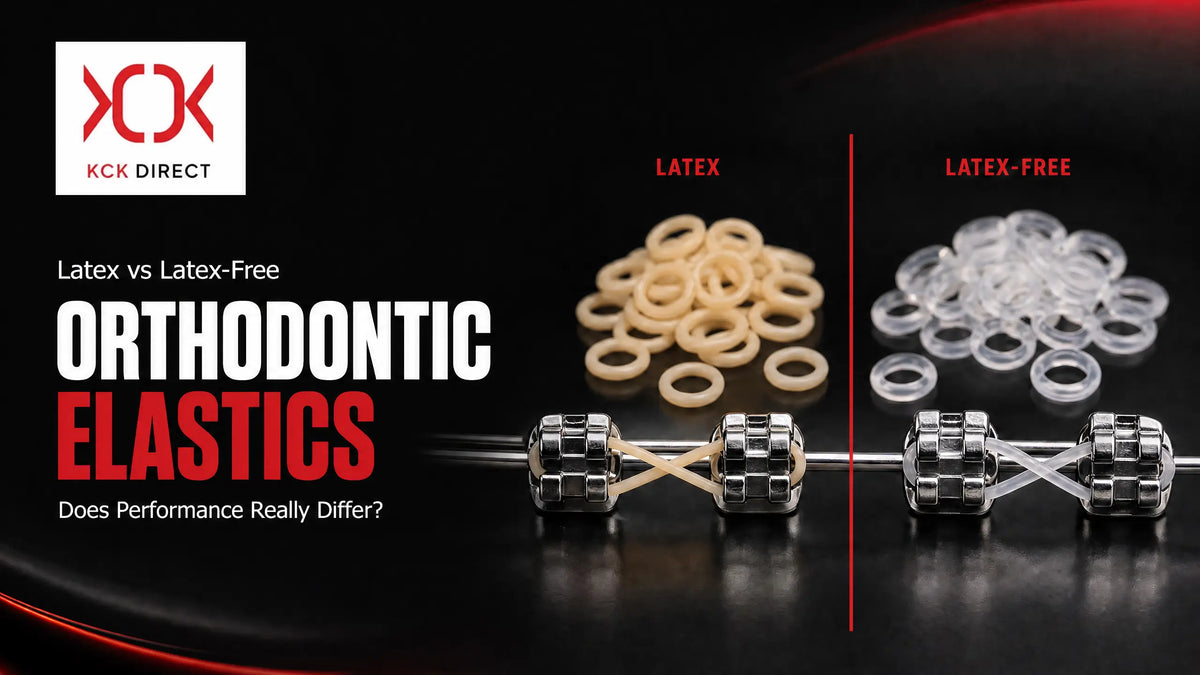
Orthodontic elastics play an important role in many orthodontic treatments. At first glance, latex and latex-free elastics may look the same. However, they differ in their material, performance, and clinical use.
While many people choose latex-free elastics to avoid allergic reactions, that is not the only difference between the two.
Understanding these differences can help you choose the right elastic for each patient and treatment plan.
In this guide, we will compare latex and latex-free orthodontic elastics, explain their benefits and limitations, and help you make an informed choice.
What Are Latex and Latex-Free Orthodontic Elastics?
Orthodontic elastics are small rubber bands that dentists and orthodontists use to apply controlled force during treatment.
They help improve the bite and move teeth into the correct position. Both latex and latex-free elastics perform the same basic function, but they differ in the materials used to make them.
Material Composition
Latex orthodontic elastics
- Made from natural rubber latex.
- Highly flexible and provide consistent force.
- Commonly used in orthodontic treatment unless the patient has a latex allergy.
Latex-free orthodontic elastics
- Made from synthetic materials such as silicone or polyurethane.
- Designed for patients with latex sensitivity or allergy.
- Offer a safe alternative without using natural rubber.
Primary Clinical Purpose
Both latex and latex-free orthodontic elastics help:
- Apply continuous force to move teeth.
- Correct bite problems such as overbite, underbite, crossbite, and open bite.
- Close small gaps between teeth.
- Guide teeth into proper alignment during braces or clear aligner treatment.
- Support efficient tooth movement when used as instructed.
Similarities Between Latex and Latex-Free Elastics
Although they are made from different materials, both types have many features in common.
- Available in the same sizes, force levels, and configurations.
- Compatible with braces, hooks, and orthodontic buttons.
- Used for the same orthodontic treatment goals.
- Require daily replacement to maintain the recommended force.
- Available in different strengths to suit different treatment stages.
- Need good patient compliance for effective treatment. Wearing them as instructed is important for achieving the desired results.
- Must be stored properly in a cool, dry place to help maintain their quality and elasticity until use.
Do Latex and Latex-Free Elastics Perform Differently?
Yes. Latex and latex-free orthodontic elastics perform differently, even though they serve the same clinical purpose. The main differences are how they deliver force, how long they maintain it, and how they recover after stretching.
Initial Force Delivery
Latex elastics usually deliver a higher and more consistent initial force. This makes them a popular choice for many orthodontic treatments.
Latex-free elastics also provide the required force, but the initial force may be slightly lower depending on the material and manufacturer.
Force Decay
Latex elastics generally maintain their force for a longer period. They lose force more slowly during daily wear.
Latex-free elastics tend to lose force more quickly. Because of this, patients may need to replace them more frequently to maintain the desired force levels.
Elastic Recovery
Latex elastics return to their original shape more effectively after stretching. This helps them provide consistent performance throughout the wear period.
Latex-free elastics have good elasticity, but they may show slightly less recovery after repeated stretching.
Consistency Over the Wear Period
Latex elastics usually offer more stable force over time, making them suitable for treatments that require continuous force.
Latex-free elastics provide reliable performance for most orthodontic cases, especially for patients with latex allergies. However, they may show greater variation in force as they are worn.
|
Performance Factor |
Latex Elastics |
Latex-Free Elastics |
|
Initial force |
Higher and more consistent initial force |
Slightly lower initial force, depending on the material and manufacturer |
|
Force decay |
Retains force for a longer period |
Loses force more quickly and may require more frequent replacement |
|
Elasticity |
Excellent elasticity with good stretch and recovery |
Good elasticity, but slightly less stretch recovery than latex |
|
Durability |
More durable during normal wear |
Good durability, but may wear out faster with continuous stretching |
|
Allergy risk |
Not suitable for patients with latex allergy |
No latex allergy risk; safe for latex-sensitive patients |
When Are Latex Orthodontic Elastics Preferred?
Latex orthodontic elastics are often the first choice when the patient does not have a latex allergy. They provide reliable force and perform well in many routine orthodontic treatments.
Patients Without Latex Sensitivity
Latex elastics are suitable for patients who do not have a latex allergy or sensitivity. Before using them, always confirm that the patient has no history of latex-related reactions.
Consistent Force Delivery
Latex elastics deliver steady and predictable force throughout the recommended wear period. This helps support controlled tooth movement and bite correction.
Routine Orthodontic Mechanics
Dentists commonly use latex elastics for routine orthodontic treatments, including:
- Correcting overbites, underbites, crossbites, and open bites.
- Closing small gaps between teeth.
- Improving the way the upper and lower teeth fit together.
Cost Considerations
Latex elastics are generally more affordable than latex-free alternatives. This makes them a cost-effective option for many orthodontic practices.
Common Clinical Use
Many orthodontists choose latex elastics because they have a long history of successful clinical use. They are available in a wide range of sizes and force levels to suit different treatment needs.
Better Elastic Recovery
Latex elastics return to their original shape more effectively after stretching. This helps maintain consistent performance during daily wear.
Wide Product Availability
Most dental suppliers offer latex elastics in multiple sizes, strengths, and configurations. This makes it easier for dentists to select the right elastic for different treatment stages.
When Should Latex-Free Elastics Be Used?
Latex-free orthodontic elastics are the preferred choice when a patient cannot safely use natural rubber latex. They provide an effective alternative while supporting the same treatment goals.
Patients With a Latex Allergy
Always use latex-free elastics for patients with a confirmed latex allergy. This helps prevent allergic reactions that can range from mild irritation to severe symptoms.
Patients With Suspected Latex Sensitivity
If a patient reports itching, redness, swelling, or irritation after using latex products, switch to latex-free elastics until the cause is confirmed.
Medical History Considerations
Review the patient's medical history before selecting orthodontic elastics. If there is a history of latex allergy, sensitivity, or previous reactions to latex medical products, choose latex-free elastics.
Pediatric Patients (When Appropriate)
For children with a known or suspected latex allergy, latex-free elastics are the safer option. They provide the required orthodontic force without exposing the child to natural rubber latex.
Patient Preference
Some patients prefer to avoid latex products for personal reasons. When clinically appropriate, latex-free elastics can meet their preference while supporting treatment.
Patients at Higher Risk of Latex Allergy
Consider latex-free elastics for patients who have a higher risk of developing latex allergy, such as those with a history of multiple surgeries or repeated exposure to latex-containing medical products.
Clinical Settings With Latex-Free Protocols
Some dental clinics and hospitals follow latex-free policies to reduce the risk of allergic reactions. In these settings, latex-free elastics are the standard choice.
Clinical Factors That Influence Elastic Selection
Choosing the right orthodontic elastic depends on more than just the material type. Dentists should consider the needs, treatment goals, and clinical requirements before selecting latex or latex-free elastics.
Patient Allergy History
The allergy history of the patient is one of the most important factors when selecting elastics. Use latex-free elastics for patients with confirmed latex allergies or suspected sensitivity to avoid possible reactions.
Treatment Mechanics
The type of tooth movement and bite correction required can influence elastic selection. Dentists should choose elastics based on the treatment plan, such as correcting overbite, underbite, crossbite, or closing spaces.
Required Force Level
Different orthodontic movements require different force levels. Select elastics with the appropriate size and strength to provide the required force without applying excessive pressure.
Wear Compliance
Patient cooperation plays an important role in treatment success. Choose elastics that the patient can comfortably wear as instructed. Easy-to-use and comfortable elastics may improve daily compliance.
Replacement Frequency
Orthodontic elastics lose their force over time and need regular replacement. Consider the patient's routine and ensure they understand the importance of changing elastics as recommended.
Manufacturer Consistency
The quality and performance of elastics can vary between manufacturers. Choose products from reliable manufacturers that provide consistent sizing, force levels, and performance.
Clinical Experience and Preference
Dentists often select elastics based on their clinical experience and familiarity with a specific brand. Using a trusted product can help maintain predictable treatment outcomes.
Common Misconceptions About Latex-Free Elastics
There are several misconceptions about latex-free orthodontic elastics. Understanding the facts helps dentists choose the right elastic based on clinical needs rather than assumptions.
Latex-Free Elastics Are Not Always Weaker
Many people believe that latex-free elastics provide less force than latex elastics. However, latex-free elastics can deliver effective and reliable force when dentists select the correct size and strength for the treatment.
Material Alone Does Not Decide Treatment Success
The type of material is only one factor in orthodontic treatment. The right elastic size, force level, treatment plan, and proper usage all play an important role in achieving good results.
Patient Compliance Has a Greater Impact
Even the best-quality elastic will not work properly if patients do not wear it as instructed. Changing elastics regularly and following the dentist's instructions have a bigger impact on treatment progress.
Choose Elastics Based on Clinical Needs
Dentists should select elastics based on the patient's condition, treatment goals, and required force level. Latex or latex-free options can both provide good results when used correctly.

Which Option Is Right for Your Patient?
The right orthodontic elastic depends on the patient's needs, medical history, and treatment requirements. Both latex and latex-free elastics can provide effective results when dentists choose the correct option and use them properly.
Checklist Before Selecting Orthodontic Elastics
Consider these factors before making a choice:
- Does the patient have a latex allergy or sensitivity?
- What type of tooth movement or bite correction is required?
- What force level does the treatment need?
- Can the patient follow the recommended wear schedule?
- Does the patient need frequent elastic replacement?
- Does the selected product provide consistent quality and performance?
|
Choose Latex |
Choose Latex |
|
Patient has no latex allergy |
Patient has a confirmed latex allergy |
|
Patient needs reliable and consistent force delivery |
Patient has latex sensitivity or a history of reactions |
|
Suitable for routine orthodontic mechanics |
Suitable when avoiding natural rubber latex is necessary |
|
Cost-effective option for many clinical cases |
Safer choice for latex-sensitive patients |
|
Commonly used due to long clinical experience |
Preferred in latex-free clinical environments |
Conclusion
Both latex and latex-free orthodontic elastics are effective options for orthodontic treatment. When dentists choose the correct size, strength, and type of elastic, both materials can provide reliable force to support tooth movement and bite correction.
Although latex and latex-free elastics have some differences in force delivery and performance, the difference is often smaller than many clinicians assume.
The success of treatment depends more on selecting the right elastic for the clinical situation and ensuring that patients follow the recommended wear instructions.
Before choosing an elastic, dentists should always consider the patient's allergy history, treatment goals, required force level, and individual needs. A proper selection helps provide safe, comfortable, and predictable treatment outcomes.
FAQ’s
What is the difference between latex and latex-free orthodontic elastics?
Latex orthodontic elastics are made from natural rubber latex, while latex-free elastics are made from synthetic materials such as silicone or polyurethane. Both types help move teeth and correct bite problems, but they differ in their material, elasticity, and force performance.
Do latex-free orthodontic elastics perform differently than latex elastics?
Yes, they can perform slightly differently. Latex elastics usually provide more consistent force and better elastic recovery, while latex-free elastics offer a safe alternative for patients with latex sensitivity. However, both options can work effectively when dentists select the right size and force level.
When should latex-free orthodontic elastics be used?
Dentists should use latex-free elastics for patients with a confirmed latex allergy, suspected sensitivity, or a preference to avoid latex products. They are also useful in clinics that follow latex-free protocols.
Are latex orthodontic elastics stronger than latex-free elastics?
Not always. Latex elastics may provide more consistent force and better recovery, but the strength depends on the size, thickness, and force rating of the elastic. A properly selected latex-free elastic can also provide the required force for orthodontic treatment.
Can patients with latex allergies safely use latex-free orthodontic elastics?
Yes. Latex-free orthodontic elastics do not contain natural rubber latex, making them a safer option for patients with latex allergies or sensitivity. Dentists should always review the patient's medical history before selecting elastics.
How does force decay differ between latex and latex-free elastics?
Latex elastics usually maintain their force for a longer period and show slower force loss during wear. Latex-free elastics may lose force slightly faster, so patients may need to replace them regularly to maintain effective treatment.


Last Chance Deals


Last Chance Deals


Last Chance Deals


Rs. 2,600.00
Rs. 3,400.00
24% Off

Last Chance Deals


Last Chance Deals


