


Dental Clinic Setup Cost in India (2026): Complete Budget Breakdown from ₹5 Lakhs to ₹20+ Lakhs
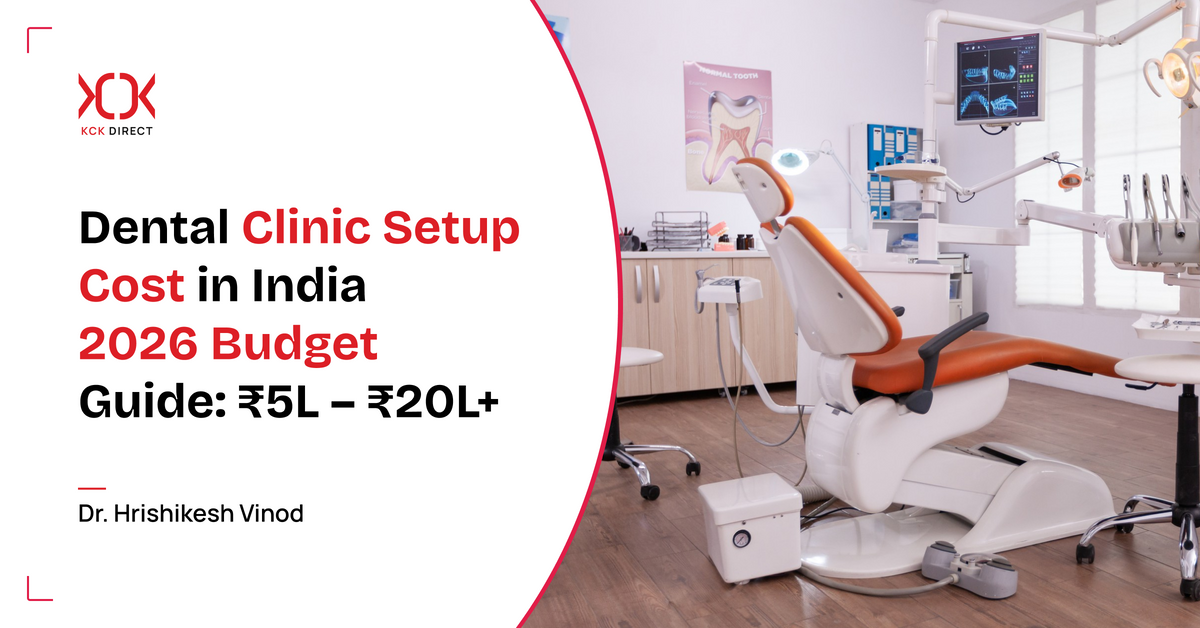
Setting up a dental clinic is very different from setting up a general medical practice. The investment is higher, the infrastructure is more demanding, and several decisions that seem minor on paper can become expensive to fix once the clinic is operational.
For a dentist planning to start a clinic in India in 2026, the first question is usually simple: How much money will I actually need?
The answer depends on the size of the clinic, the number of chairs, the level of equipment and the kind of patient experience you want to create. But having a realistic estimate before starting the work can prevent a lot of unnecessary spending later.
How much does it cost to start a dental clinic?
A basic dental clinic can potentially be started in the range of ₹6-7 lakh, provided the setup is kept simple and the dentist is careful with the initial purchases. A ₹5-10 lakh budget is therefore possible, but it would represent a fairly basic setup rather than a fully equipped premium clinic.
For a more standard clinic, a budget of around ₹15-16 lakh may be more realistic. A mid-range three-chair clinic can move into the ₹15-20 lakh range, while larger or more technology-intensive clinics can go considerably higher.
There is no fixed upper limit. Once a clinic moves towards multiple chairs, advanced diagnostics and a more elaborate interior, the investment largely depends on the dentist's plans and available space.
Where does most of the money go?
 Two areas generally account for a significant portion of the initial investment: the dental equipment and the interior infrastructure.
The dental chair and associated equipment are obvious expenses. What is sometimes overlooked, however, is everything required to make the clinic function around those chairs.
Electrical work, plumbing, ceiling and other civil work need to be planned before the equipment arrives. In fact, electrical and plumbing are among the costs that dentists tend to underestimate during the initial planning stage.
The interior also deserves attention because a dental clinic is not simply a consultation room. Patients may spend considerably more time in a dental clinic than they would in a typical medical consultation. Waiting areas, operational design, cleanliness and the overall environment therefore become important parts of the clinic experience.
Sterilisation is another area where cost-cutting needs to be approached carefully. Patients today are increasingly conscious of whether instruments are properly sterilised and whether appropriate infection-control practices are being followed.
Don't buy everything on Day One.

One of the easiest ways to overspend is to assume that every piece of equipment and every bit of furniture needs to be installed immediately.
For example, a dentist planning a three- or four-chair clinic may initially operate with one or two chairs. However, the plumbing and electrical provisions for future chairs should ideally be completed during the initial construction. Adding these lines later can mean breaking into finished interiors and creating unnecessary disruption.
The chairs themselves can be added when patient volume justifies the investment.
The same principle applies to storage. There is little value in filling the clinic with cupboards, lofts and additional storage simply because there is space available. If the clinic later feels congested, additional storage can be added based on actual need.
Even backup power needs to be considered practically. A large generator may not always be necessary for a small clinic. Depending on the local power situation and the equipment being used, an inverter may be sufficient for certain requirements.
What about RVG, OPG and CBCT?

Diagnostic equipment is another area where dentists need to balance convenience with utilisation.
An RVG can be useful from the beginning, while an OPG may also make sense depending on the expected patient flow. CBCT, on the other hand, represents a substantially larger investment and may not be justified for every new clinic.
The basic question should be: How frequently will the equipment actually be used?
If the clinic does not generate enough cases to justify the investment, referring patients to an imaging centre may make more financial sense initially. As the practice grows, equipment can be added according to actual clinical requirements.
The biggest mistake is starting without a complete plan
In my experience, one of the biggest problems during clinic setup is not necessarily overspending. It is poor coordination.
A dental clinic involves electricians, plumbers, interior teams, equipment suppliers and several other people. If there is no one coordinating the entire project, something as simple as a missed electrical point or plumbing line can force completed work to be redone.
Waste-disposal requirements and provisions for pits should also be considered before construction begins. These are not the kinds of problems you want to discover after the interiors are complete.
This is why having a proper estimate and project plan before starting the work is so important. The objective is not simply to get the clinic ready; it is to get it ready without having to dismantle parts of it later.
Think beyond the opening day
A dental clinic should ideally be planned as a long-term workspace rather than a one-time interior project.
Once a clinic begins seeing patients regularly, shutting it down for renovation or major modifications becomes difficult. Patient appointments, staff schedules and daily operations are already in place.
That makes the initial planning stage particularly important.
The goal should not be to buy the most expensive equipment or create the most elaborate interior. It should be to build a clinic where the infrastructure, equipment, workflow and future expansion plans work together.
A dentist may begin with a ₹6-7 lakh basic setup, move towards a ₹15-20 lakh mid-range clinic, or invest substantially more in a larger three-chair or multispecialty facility. The number itself matters less than whether the money is being spent thoughtfully.
After all, the commitment to a clinic does not end when construction is completed. In many ways, that is when it begins.


Last Chance Deals


Last Chance Deals


Last Chance Deals


Rs. 2,600.00
Rs. 3,400.00
24% Off

Last Chance Deals


Last Chance Deals


